

Need money urgently while under debt review?
Published on 17 May 2026
Organise an urgent shortfall, speak to your existing counsellor and check options before accepting another loan during debt review.
Read more →Find answers about debt review, debt counselling and managing your money. Start with the question that matters to you, then follow the guide to a practical next step.
Check whether debt review fits your situation and compare the alternatives.
The income, expenses and commitments a counsellor needs to assess.
Weigh the benefits, restrictions and responsibilities before deciding.
Compare what each route involves and the questions to ask about cost.
Understand why these options need different assessments.
Read answers to common worries about the process.
Recognise the borrowing cycle and consider your next step.
Use the register, ask questions and compare the support offered.
Understand a quote and the difference between a lower payment and a lower total cost.
Know which charges to ask about before accepting a quote.
Understand how interest affects repayments and what to discuss with a counsellor.
See why postponing a payment can change the amount you repay.
Understand collection stages, your responsibilities and when to ask for help.
Understand notices, summonses and later collection stages.
Read about repossession, voluntary surrender and the documents involved.
Understand why the stage of an account matters when asking for help.
Read about creditor conduct and your responsibilities under a plan.
Understand the steps to discuss when legal action is a concern.
Learn about the legal documents involved in debt collection.
Read about the assessment of lending and a case described by DRC.
Understand the commitment before guaranteeing another person's debt.
A historical article about changes to credit legislation.
Find guidance on payment problems, emergencies, work and family circumstances.
Understand credit restrictions, emergency needs and borrowing after clearance.
Prepare an action plan for an unexpected shortfall.
What to prepare and discuss when your circumstances change.
Understand why a missed payment needs attention before you skip it.
Start with your budget, documents and conversations with creditors.
Read about employment questions to discuss before applying.
Prepare questions about household finances and your marriage contract.
Understand the repayment term, clearance and the next steps for your credit record.
Find out why your legal stage and supporting documents matter.
Understand what can change the length of a repayment plan.
Read about checking your record after completing the process.
A historical explanation of credit information amnesty.
Plan household spending, compare repayment methods and prepare for unexpected costs.
List your income, spending and debts, then check the plan each month.
Prepare a budget and choose a repayment order you can maintain.
Set aside ordinary expenses before deciding what to spend on celebrations.
Use everyday decisions to practise spending and saving.
Consider your own liability before taking credit for friends or family.
Consider transport costs as part of your household budget.
Read client accounts and company news in their original context.
Read the circumstances and repayment figures described in this case.
Read the account-by-account rates and figures described by DRC.
Read this individual account in its original circumstances.
Company news about a community assistance project.
Choose the tool that answers your question. The figures are estimates; they do not decide whether you qualify for debt review.
Check your budget and an illustrative payment before fees.
See what remains after living costs and debt payments.
Compare debt repayments with monthly income.
Compare paying the highest interest rate first with minimums only.
Explore how interest, payments and term affect repayment cost.
Work out a savings target based on essential spending.
Check a planned purchase against the money left in your month.
Compare the value of your assets with the debts you owe.
Explore your household finances with an educational score.
Explore credit behaviours without running a credit check.
Identify questions to discuss about an older debt.
Choosing between different approaches? Compare debt relief options.

Published on 17 May 2026
Organise an urgent shortfall, speak to your existing counsellor and check options before accepting another loan during debt review.
Read more →
Understand which documents to check during an application, proposal, formal arrangement or payment problem, and where to find specific guidance.
Read more →

Understand new credit restrictions, emergency options and what lawful clearance changes before applying again.
Read more →

Choosing between debt review and sequestration can shape your financial future. Here's what South Africans need to know to make the right decision.
Read more →

Thinking about debt review? Learn what your rights are and what creditors can’t legally do once you're under protection. Stay informed and in control.
Read more →

Worried about your car or home being repossessed? Learn how debt review can protect your assets and stop legal action dead in its tracks – but timing is everything.
Read more →
Credit card interest rates in South Africa are sky-high—but did you know that through debt review, you could reduce them to as low as 0%? Here’s how.
Read more →
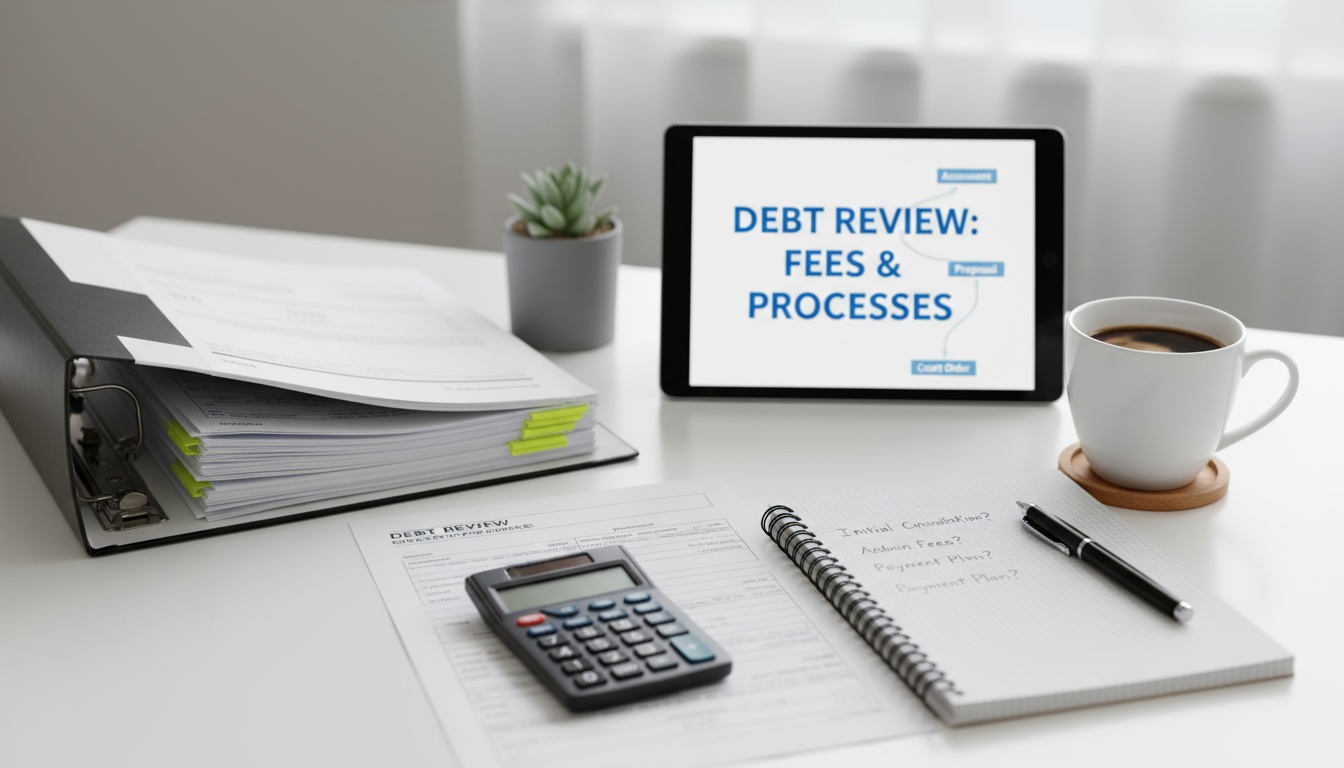
Understand debt review application, restructuring, aftercare and legal costs. Use the NCR fee reference and ask for a complete written quote.
Read more →

Understand debt review eligibility, income requirements, documents and commitments. Learn what needs an individual assessment before you apply.
Read more →

Compare debt review, consolidation loans and administration by affordability, fees, total repayment cost and legal commitments in South Africa.
Read more →

Know what to do before or after a missed debt review payment. Prepare the figures and confirm any agreed change with your counsellor.
Read more →

Understand what affects a debt review repayment period, how extra payments can change progress and what to check before clearance.
Read more →